Our Factory
Earth, fire and the hands of masters
There are lands where clay is turned not into objects, but into memory. MÜGE is born in one of them.
How it is made
Henan province in northern China is one of those lands where clay is turned not into objects, but into memory. Here, in the bend of the Yellow River, the craft has lived for so long that the very word "ceramics" sounds like the name of a place. It was from Henan's Song-dynasty kilns that the legendary Jun ware emerged - a dense stoneware body under a thick, almost living glaze. MÜGE is born right here - in this tradition, in this land.
Our partner is a large full-cycle factory. Not a workshop with a dozen kilns, but serial production: long forming lines, tunnel kilns, hundreds of people per shift. We do not disclose the factory's name - it is part of the brand's confidential commercial information. But the scale and discipline of this production show in every piece that makes it to your table.
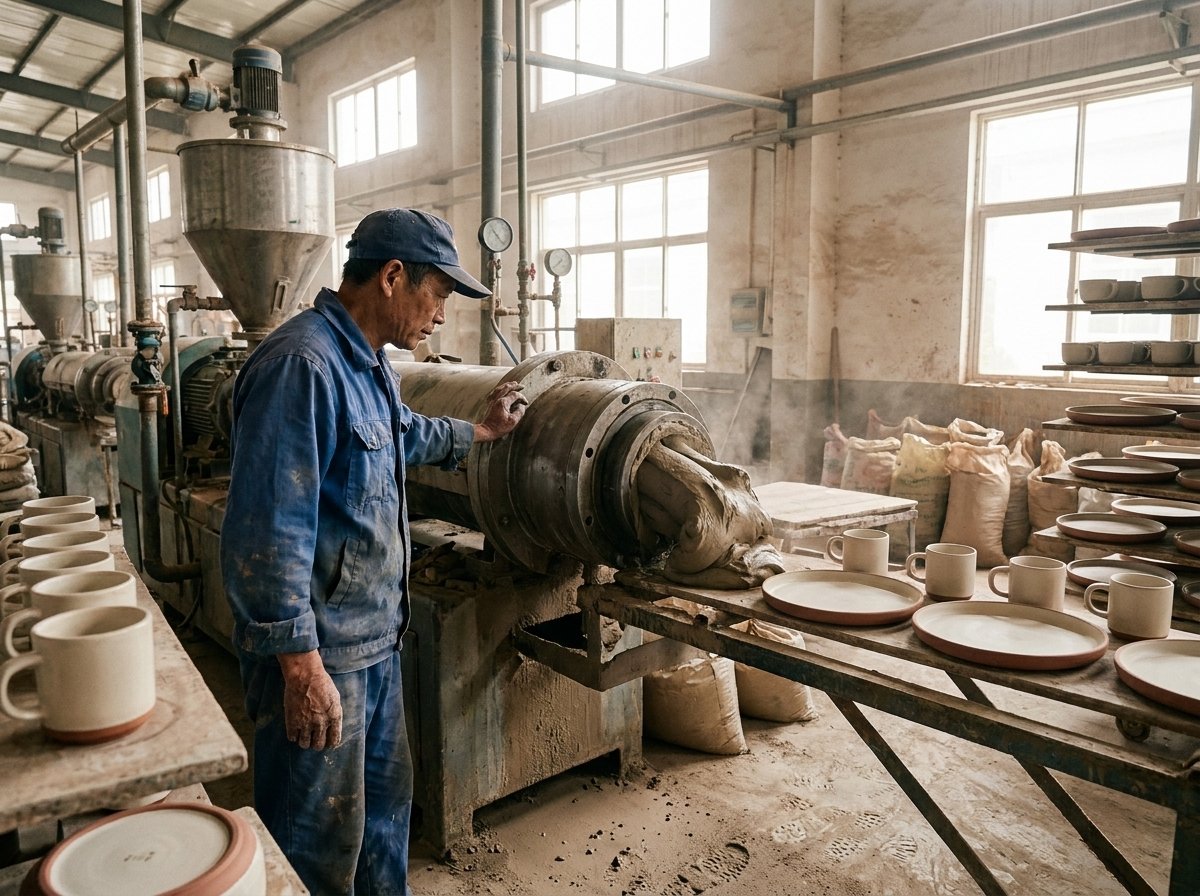
Everything begins with the clay body. Stoneware is an honest, slightly stubborn material - it does not forgive haste. The clay is sieved, kneaded in industrial mixers to a uniform density and moisture, then left to rest. Only after that is the body allowed onto the line: stable raw material means stable geometry and weight for every plate in the batch.
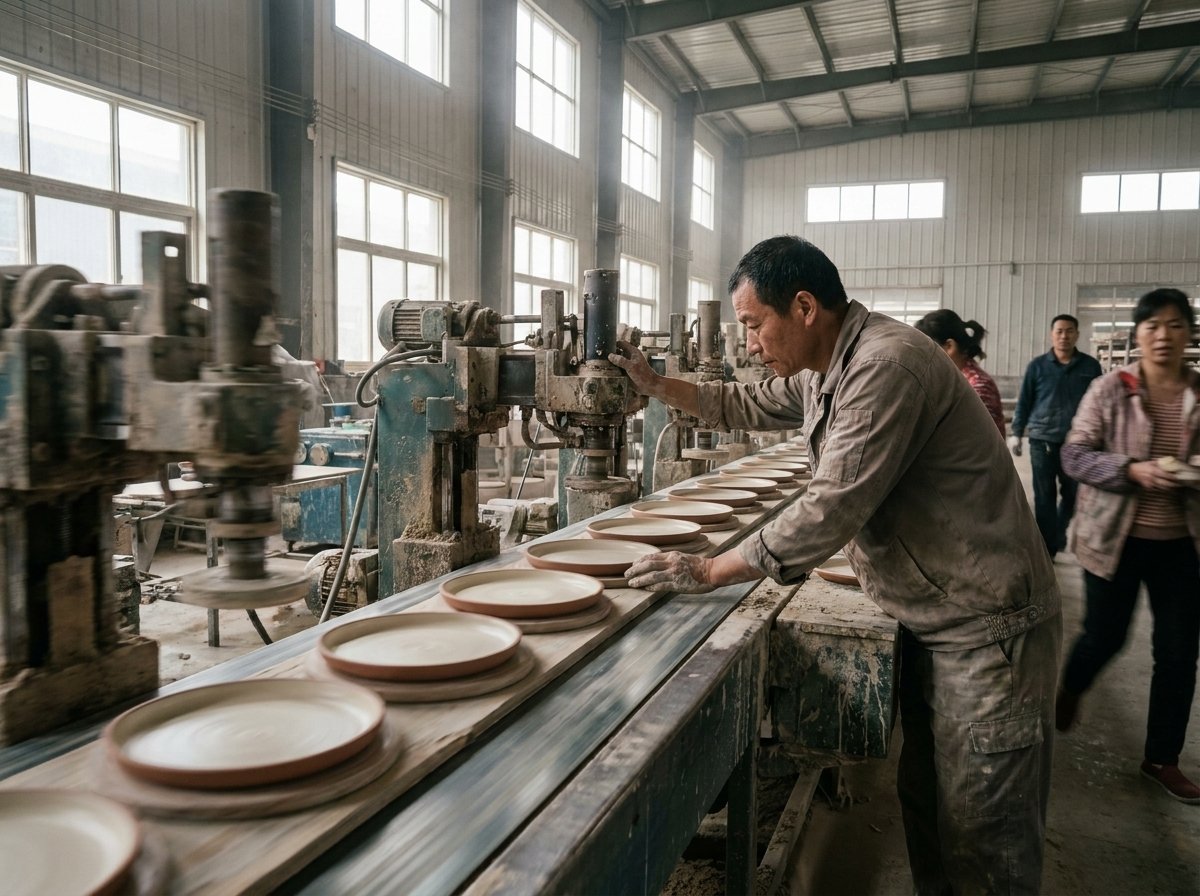
The shape is set by automatic forming machines: the low straight rim of a plate, the clean hemisphere of a bowl, the cylinder of a mug. Freshly formed pieces dry slowly on a conveyor - dozens of metres of neat rows of raw terracotta. Slow drying is insurance against internal stresses, the reason cheap tableware cracks within its first year.
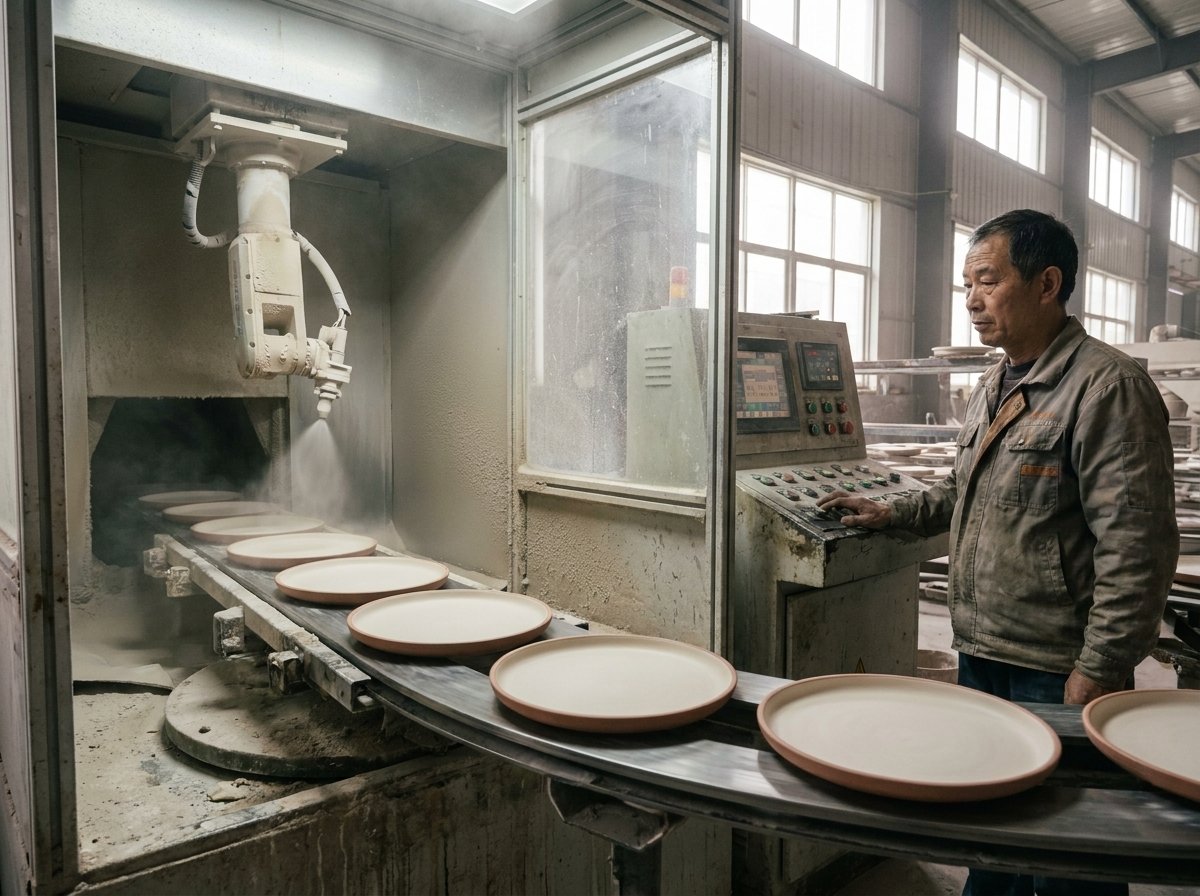
The glaze is applied in an automated booth: a robotic arm coats the inner and upper surfaces with an even matte layer - no drips, no colour shifts, batch after batch. The lower rim and the foot are deliberately left bare: raw terracotta, the MÜGE signature. What others hide under a full coat of glaze is, for us, the honesty of the material - there for your hand to feel.
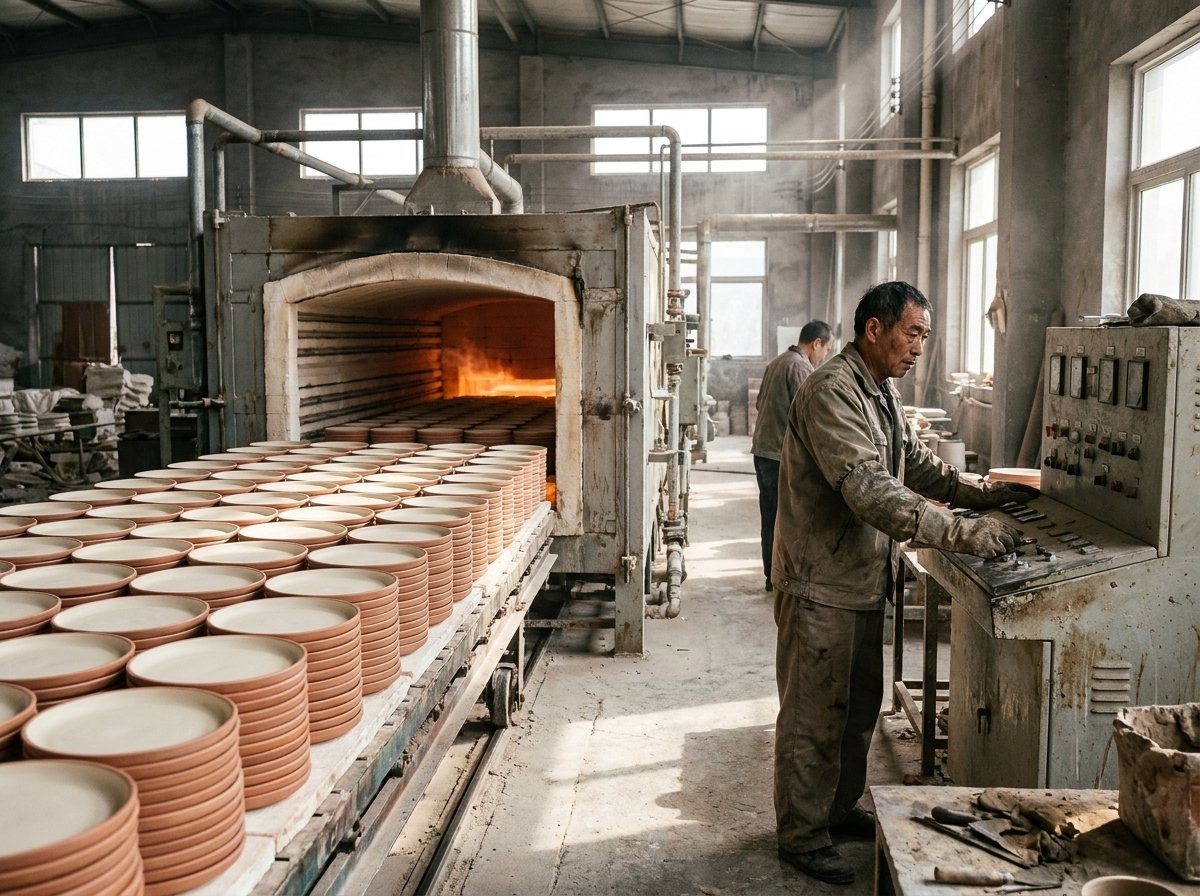
Firing is the heart of the production. The long tunnel kilns run around the clock: trolleys carrying hundreds of pieces move slowly through the heating, peak and cooling zones. The temperature reaches around 1300 °C - it is this high-temperature firing that turns soft clay into a dense stoneware body. That is why MÜGE tableware has nothing to fear from the oven, the microwave or the dishwasher: it has been tempered by a heat it will never meet again in everyday life.
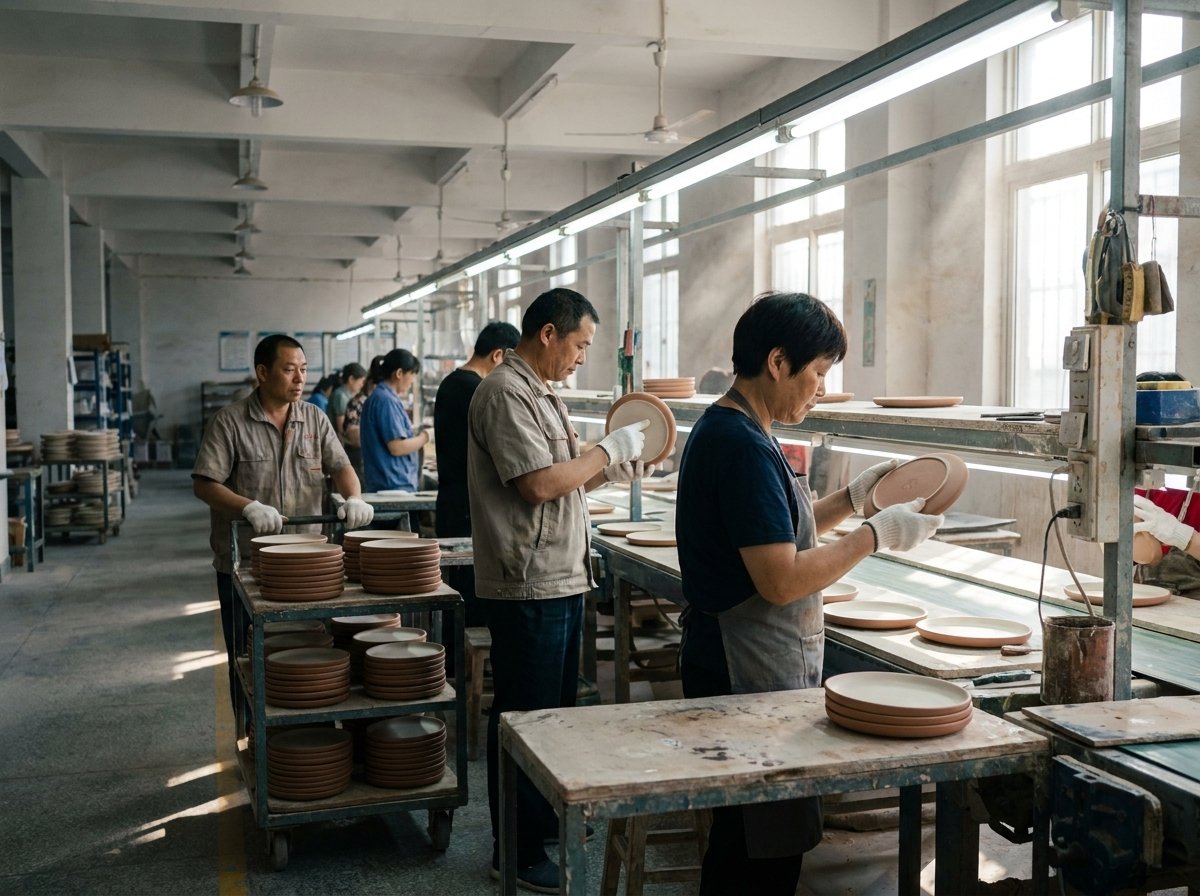
Then comes inspection. Every piece passes through the inspectors' hands: geometry, evenness of the glaze, cleanness of the edge, the deep solid ring of a properly fired body. The target defect rate is no more than one percent: the piece you take out of the box must be flawless. This is a condition of our partnership, and it is not up for discussion.
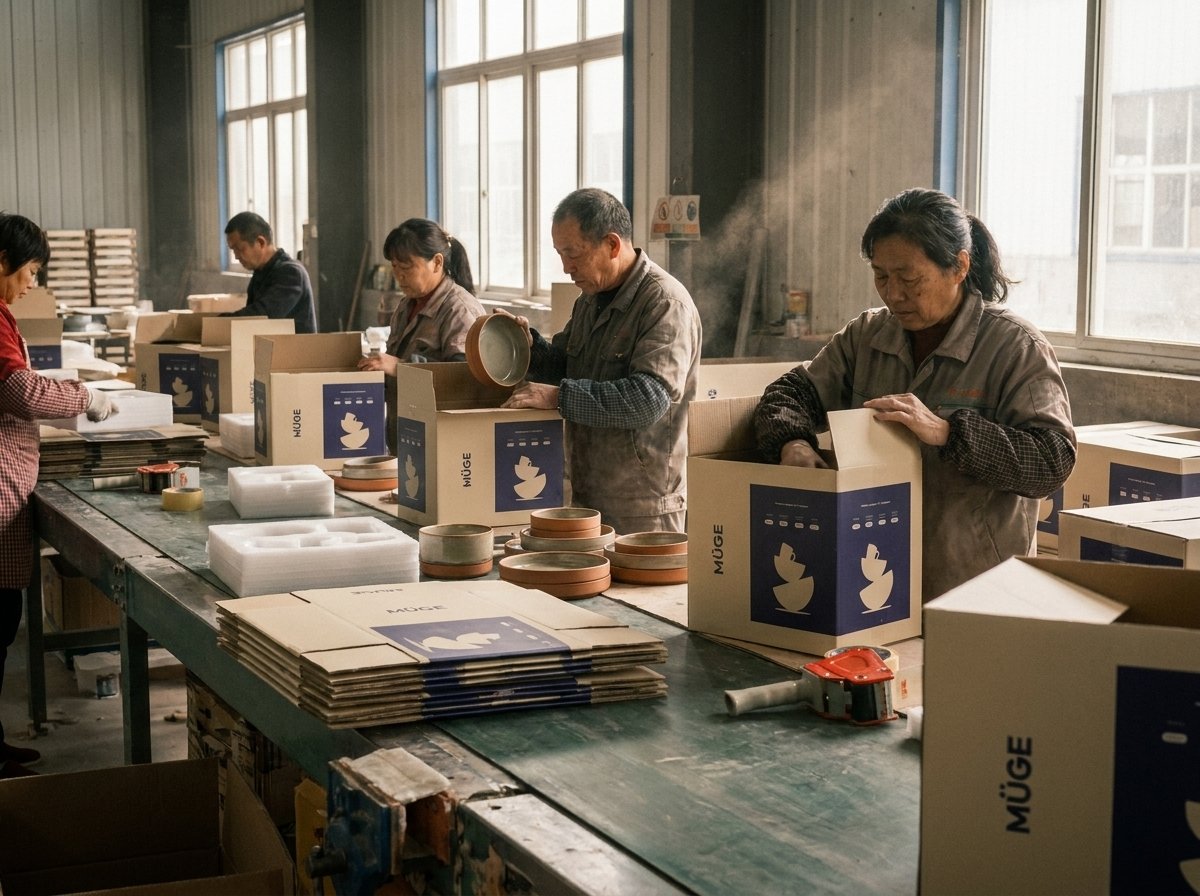
The finale is packing. Sets are placed in signature MÜGE boxes with protective inserts: ceramics are fragile cargo, and the journey from kiln to table must end without a single chip. Neat pallets leave the factory warehouse for Russia - from there you know the rest: marketplace, courier, your kitchen.
Born here. Made where ceramics are understood with the whole body - by hand, by fire and by time.
You are buying a piece with provenance
Ancient earth, living fire, the hands of masters and our own exacting quality control - that is what stands behind every MÜGE plate.
Browse collections